Wood vs. Vinyl Fencing: Which Lasts Longer in Montana Weather?
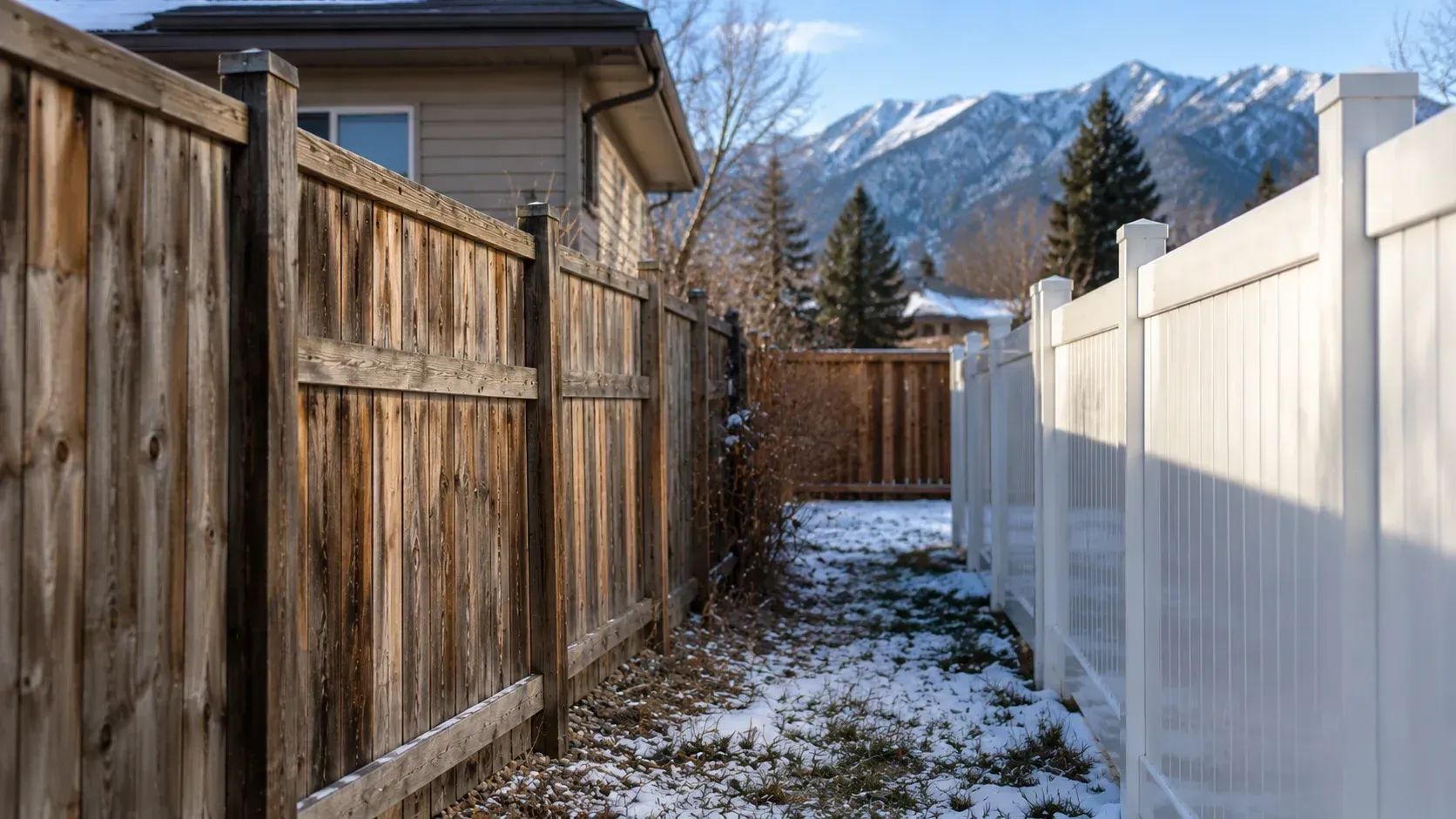
Table of Contents
- Introduction
- The Short Answer
- How Wood Fencing Actually Fails in Montana Weather
- How Vinyl Fencing Actually Fails in Montana Weather
- What Montana's Climate Does That Milder Places Do Not
- Wood vs. Vinyl Fencing in Montana: The Honest Side by Side
- Installation Decides More Than the Material Does
- Repairs Are Where the Two Materials Really Diverge
- Which One Lasts Longer for Your Specific Situation
- Cost Over Time Rather Than Cost on Day One
- Conclusion
- Get a Written Estimate for Both Materials
- Frequently Asked Questions
Key Takeaways
- Vinyl generally lasts longer in raw years because it cannot rot, will not be eaten by insects, and never needs staining or sealing.
- Wood does not lose that comparison as badly as the year count suggests, because wood fails gradually and repairably while vinyl fails suddenly and in whole panels.
- Montana's real enemies are ultraviolet exposure, freeze and thaw cycling, snow load pressing against the fence, and wind. Cold makes vinyl more brittle and more likely to crack on impact.
- Post setting and drainage matter more to fence lifespan than the choice between wood and vinyl. A frost-heaved post ruins either material.
- Choose wood if you want repairability, a natural look, and lower upfront cost. Choose vinyl if you want to stop maintaining a fence entirely.
Introduction
Vinyl fencing generally lasts longer than wood in Montana weather, because it cannot rot, insects will not touch it, and it never needs to be stained or sealed. That is the straight answer. The more useful answer is that the two materials fail in completely different ways, and which one is right for your property depends on whether you would rather repair a fence occasionally or replace sections of it rarely.
We build both across the Bitterroot Valley, and our fence building has given us a fairly clear picture of what actually goes wrong with each material here. It is usually not what homeowners expect when they are standing in a showroom comparing samples.
Here is how each one breaks down in our specific climate, and how to decide between them.
The Short Answer
In terms of years before the fence needs replacing, vinyl typically wins. It is immune to the two things that end most wood fences, which are rot and insect damage, and it does not require the ongoing maintenance that wood needs to reach its own full lifespan.
But raw years is the wrong measure on its own, for two reasons.
First, most wood fences in Montana do not die of old age. They die because a few posts heaved or rotted at ground level while the rest of the fence was still sound. That is a repair, not a replacement. Second, vinyl's failures tend to be sudden and structural. A panel that cracks in a January cold snap is not something you sand and repaint. It gets replaced, and you need a matching panel to do it.
So the honest framing is this: vinyl lasts longer before it needs anything. Wood needs attention sooner but forgives you longer.
How Wood Fencing Actually Fails in Montana Weather
Wood fences almost always fail from the ground up, and almost always in the same order:
- Rot at the soil line. This is the single most common end for a wood fence. The post is wet, then frozen, then wet again, and the zone right at grade where moisture and oxygen meet is where decay concentrates. The post can look fine above and below the failure point.
- Frost heave. Water in the soil around a post freezes, expands and lifts the post. Repeated over winters, posts work upward and out of plumb, and the fence starts leaning in sections.
- Ultraviolet degradation. Sun breaks down the surface of the wood, greying it and raising the grain. This is cosmetic at first and becomes structural once checking is deep enough to hold water.
- Checking and splitting. Repeated wet and dry, freeze and thaw cycling opens cracks along the grain. Those cracks hold water, which accelerates everything above.
- Cupping and warping of pickets, which pull fasteners loose and open gaps.
- Fastener failure. Nails back out under seasonal movement, and non-galvanized fasteners corrode and streak.
- Insect and woodpecker damage, which is usually secondary to moisture already being present.
Notice that six of those seven are moisture-driven, and the moisture usually reaches the wood at a detail rather than across the whole surface. That is why the quality of the installation matters so much, and why a well-maintained wood fence can substantially outlive a neglected one of the same age.
How Vinyl Fencing Actually Fails in Montana Weather
Vinyl does not rot, so people assume it does not fail. It fails, just differently:
- Cold-weather brittleness. This is the big one here. PVC becomes less impact-resistant as temperatures drop. A panel that would shrug off a stray hockey puck in July can crack from the same hit at twenty below.
- Impact cracking. Snowblower discharge, a sliding sheet of snow off a roof, a mower thrown rock, a vehicle backing up. Vinyl takes point impacts poorly, and cold makes it worse.
- Ultraviolet chalking and yellowing. Good vinyl includes UV inhibitors and titanium dioxide to resist this. Cheaper vinyl fades, chalks and goes brittle faster. This is where product quality separates most sharply.
- Thermal expansion and contraction. Vinyl moves noticeably with temperature. If the installer did not leave the right allowance in the rails and brackets, that movement causes buckling in heat and stress cracks in cold.
- Wind load on solid panels. A solid vinyl privacy fence is essentially a sail. In a wind event, the load transfers straight to the posts, and vinyl posts without proper reinforcement can crack at the base.
- Snow load pressure. Drifted or plowed snow pushed against a solid panel puts sustained lateral force on it. Vinyl flexes, then cracks.
- Post failures at grade. Vinyl posts are typically set in concrete and can still be affected by frost movement, and a cracked post below the rail line is not a simple fix.
The pattern is clear enough: wood fails slowly from moisture, and vinyl fails suddenly from cold and impact.
What Montana's Climate Does That Milder Places Do Not
A lot of fencing advice online is written for climates that do not look anything like ours, which is why it leads people wrong. Four things about the Bitterroot Valley matter more here than in most of the country:
- Freeze and thaw cycling. It is not just that it gets cold. It is that it crosses freezing repeatedly, which is what drives frost heave and opens checks in wood. A place that freezes once and stays frozen is gentler on a fence than one that cycles.
- Ultraviolet intensity at elevation. Sun exposure here is harder on both materials than the same hours would be at sea level. It greys wood faster and it is what separates good vinyl formulations from bad ones.
- Snow load and snow removal. Where snow gets plowed, shoveled or blown is a design consideration, not an afterthought. A fence line along a driveway takes abuse a back property line never sees.
- Wind. Solid privacy panels catch it, and the load ends up in the posts and the footings regardless of what the panels are made of.
Dry summers matter too. Soil that shrinks away from posts in August and swells with moisture in spring is working those posts loose whether they are wood or vinyl.
Wood vs. Vinyl Fencing in Montana: The Honest Side by Side
| Factor | Wood | Vinyl |
|---|---|---|
| Resists rot and insects | No | Yes |
| Needs staining or sealing | Yes, periodically | No |
| Cold-weather impact resistance | Better | Worse |
| Upfront cost | Lower | Higher |
| Lifetime maintenance cost | Higher | Very low |
| Repairable in pieces | Yes, easily | Panel replacement |
| Color and stain changeable later | Yes | No |
| Matching a repair years later | Easy | Depends on availability |
| Handles frost heave | Poorly | Poorly |
| Look | Natural, ages visibly | Uniform, stays the same |
The two rows worth sitting with are repairability and matching. A wood fence damaged in year twelve gets a new picket and a coat of stain. A vinyl fence damaged in year twelve needs a panel in the same profile and color, and whether that is still made is a real question.
Installation Decides More Than the Material Does
If there is one thing we would want a homeowner to take from this, it is that the material choice matters less than how the fence goes into the ground. We have replaced good vinyl that failed in under a decade because of bad post work, and we have repaired wood fences well past the point anyone expected them to still be standing.
What actually determines lifespan:
- Post depth and footing. Posts need to be set below the local frost line, with proper diameter and compaction. This is the difference between a fence that stays plumb and one that walks around every spring.
- Drainage at the post base. Water that sits against a post is what kills wood and what feeds frost heave under either material. Gravel at the base and a footing that sheds water rather than holding it is not optional here.
- Post material and treatment. Ground-contact rated treated posts for wood fences, and properly reinforced posts for vinyl runs that carry wind and snow load.
- Fasteners. Hot-dipped galvanized or stainless. Anything less streaks and fails.
- Expansion allowance on vinyl. Rails need room to move, because they will move.
- Gate framing and hardware. Gates are the first thing to fail on any fence, because they are the only part with moving parts and concentrated load.
- Grade and gap at the bottom. A picket or panel sitting in dirt or buried in snowpack wicks moisture and holds it.
None of that is visible when the fence is finished, which is exactly why it gets cut to win a bid.
Repairs Are Where the Two Materials Really Diverge
This is the practical consideration most comparisons skip, and over a twenty year horizon it may matter more than the lifespan question.
Wood is modular in a forgiving way. Pickets, rails and even posts can be replaced individually, in any weather, with materials available at any lumber yard in the valley. A repaired section will not match the weathered wood exactly, but wood ages, so within a season or two it blends.
Vinyl is modular in an unforgiving way. The unit of repair is the panel or the rail, it has to match the profile and color of what you already have, and it either matches or it obviously does not. Vinyl does not weather into agreement the way wood does. Manufacturers also revise product lines, so a fence installed today may not have an exact match available in fifteen years.
Two things follow from that. If you go vinyl, keep a record of the manufacturer, product line and color, and consider keeping a spare panel in the garage. And if a long, exposed run of your fence is somewhere likely to take impacts, that stretch is an argument for wood even if you want vinyl elsewhere.
Which One Lasts Longer for Your Specific Situation
Rather than a universal answer, here is how we would actually advise:
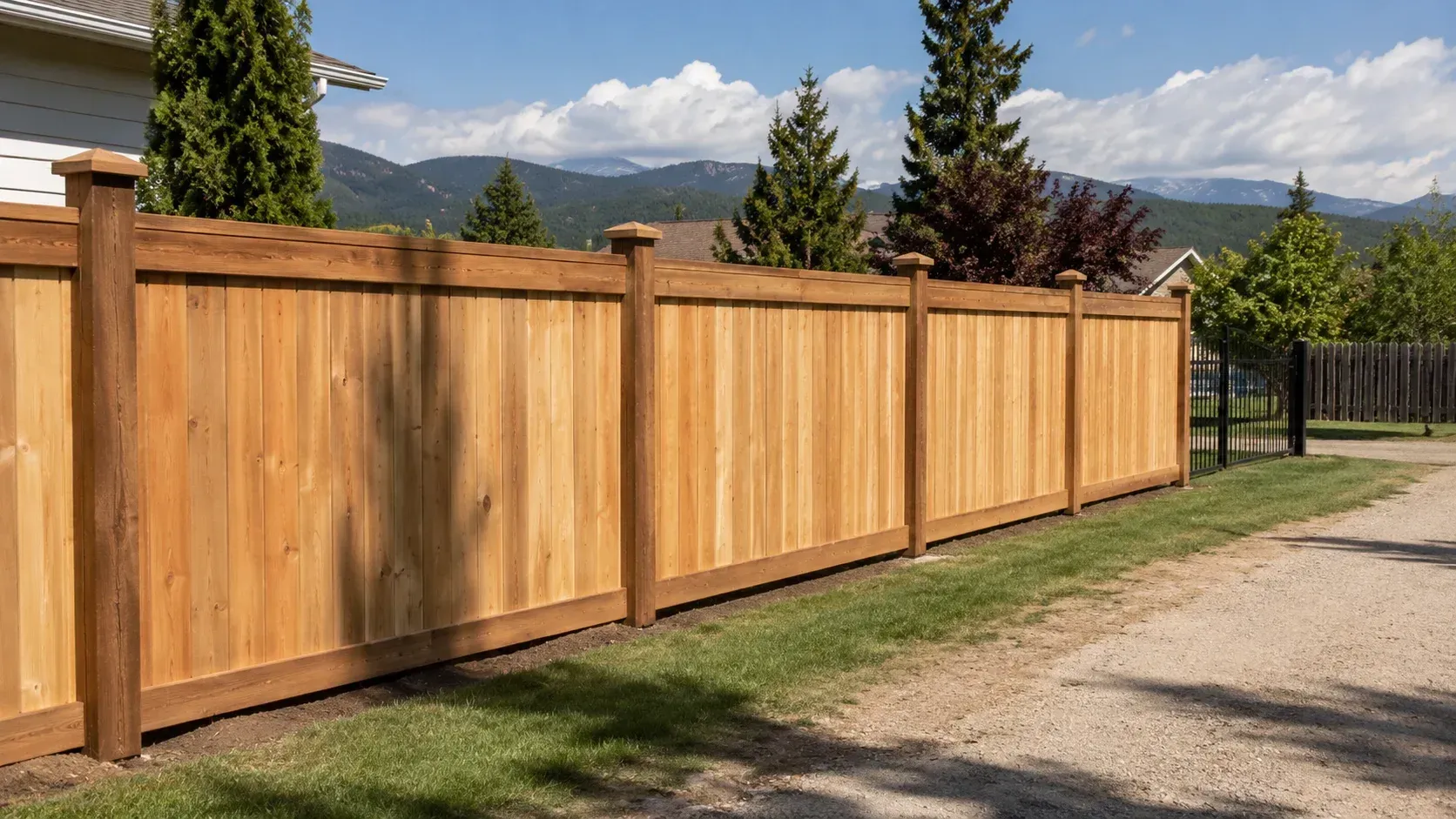
Wood is probably the better choice if you want the natural look, the fence is in a spot likely to take impacts from snow removal or equipment, you want the option to change the color later, you would rather spend less now and maintain it, or you want to be able to fix a damaged section yourself on a Saturday.
Vinyl is probably the better choice if you genuinely do not want to maintain a fence, you want a consistent uniform appearance that does not change, the run is reasonably protected from impact, you plan to stay in the house long enough for the lower maintenance to pay back the higher upfront cost, or you have had enough of staining.
Either can be the wrong choice if the posts are set badly. That is not a dodge. It is the most common reason a fence in this valley needs work before it should.
For livestock, pets or agricultural fencing, this comparison is not really the right one. Those applications have their own requirements around containment, height and rail spacing, and we would rather talk through that on site than generalize about it here.
Cost Over Time Rather Than Cost on Day One
Wood costs less to install and more to own. Vinyl costs more to install and close to nothing to own. Where the two cross over depends on how long you keep the fence and how diligent you are about maintenance, which is why we will not hand you a break-even year.
We also will not quote prices in an article, because material costs move and every property differs. What we will say is that people usually get this wrong by assuming the wood maintenance cost is optional. It is not. A wood fence that never gets sealed does not last as long as one that does, and if you know you will not keep up with it, that is a real argument for vinyl rather than a reason to feel bad.
For numbers on your own property, walk the fence line and get a written estimate for both materials, so you are comparing your actual run rather than an average.
Conclusion
Vinyl lasts longer in years because it cannot rot and does not need maintenance. Wood lasts longer in practice than that comparison suggests, because it fails gradually and can be repaired piece by piece with materials you can buy locally for decades.
Montana's freeze and thaw cycling, high ultraviolet exposure, snow load and wind are hard on both. And whichever you choose, the fence will last as long as its posts do, which means the footings and drainage deserve more of your attention than the picket material.
Get a Written Estimate for Both Materials
If you are weighing wood against vinyl for a property in the Bitterroot Valley, the most useful next step is having someone walk the actual fence line with you. Grade, drainage, snow removal patterns and wind exposure change the recommendation, and none of those are visible from a catalog.
We build both wood and vinyl fencing and we will give you a straight recommendation for your specific run, including telling you when the cheaper material is the better choice. We serve Hamilton, Corvallis, Victor, Darby and Stevensville across the Bitterroot Valley.
Reach us through the
contact page to set up a site visit, and you can read what other valley homeowners have said about working with us on our
reviews page.
Frequently Asked Questions
Does vinyl fencing crack in Montana cold?
It can. PVC becomes less impact-resistant as temperatures fall, so a hit that would do nothing in summer can crack a panel in deep cold. Cold alone does not crack a properly installed panel, but cold plus impact is the common failure, and quality of formulation matters.
How often does a wood fence need staining in Montana?
It depends on exposure, the product used and whether the fence is in full sun. Rather than a fixed interval, watch for water no longer beading on the surface and for the colour greying out. Follow the manufacturer's guidance for the specific stain or sealer you use.
Is vinyl fencing worth the extra cost up front?
If you plan to keep the property long enough for the maintenance savings to accumulate, and the fence run is not in a high-impact spot, it usually is. If you may move in a few years or you want repairability, wood often makes more sense.
Can wood and vinyl be combined on the same property?
Yes, and it can be a smart approach. Using vinyl on long low-maintenance runs and wood where impacts are likely, or where you want a natural look, is a reasonable design decision rather than a compromise.
What actually determines how long my fence lasts?
Post installation, more than material. Posts set below the frost line with proper drainage and correct footings keep a fence plumb and sound. Shallow or poorly drained posts will heave and lean regardless of whether the fence above them is wood or vinyl.